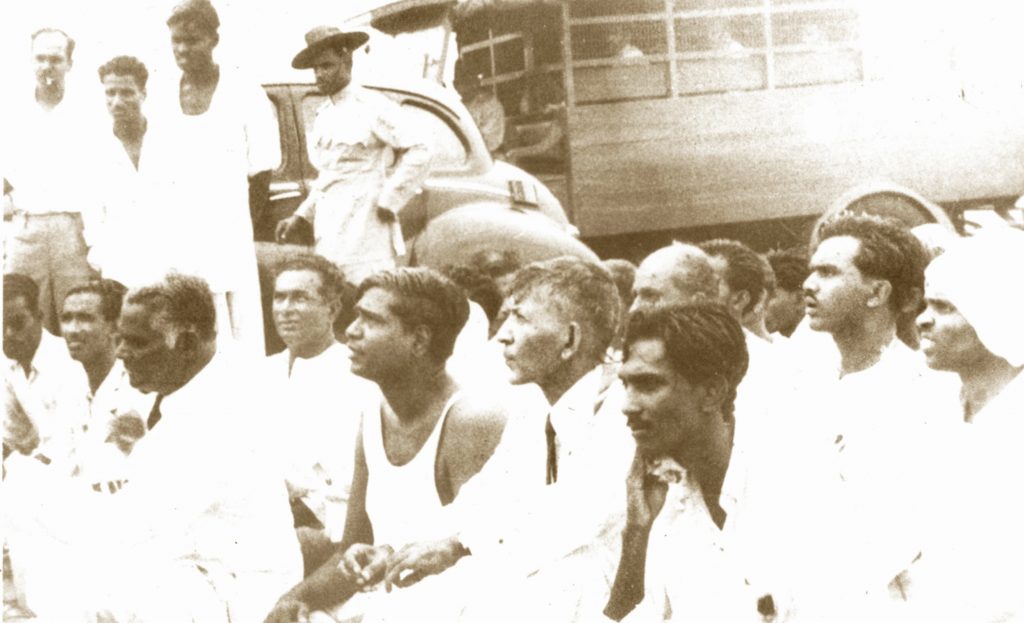
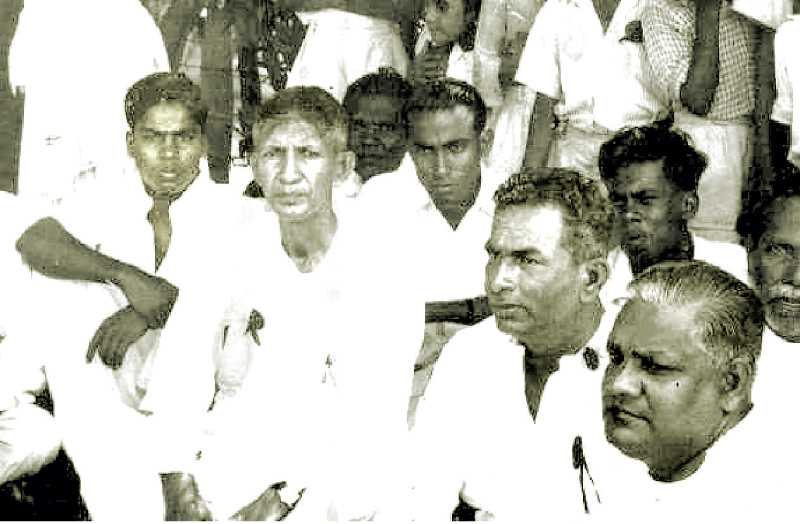
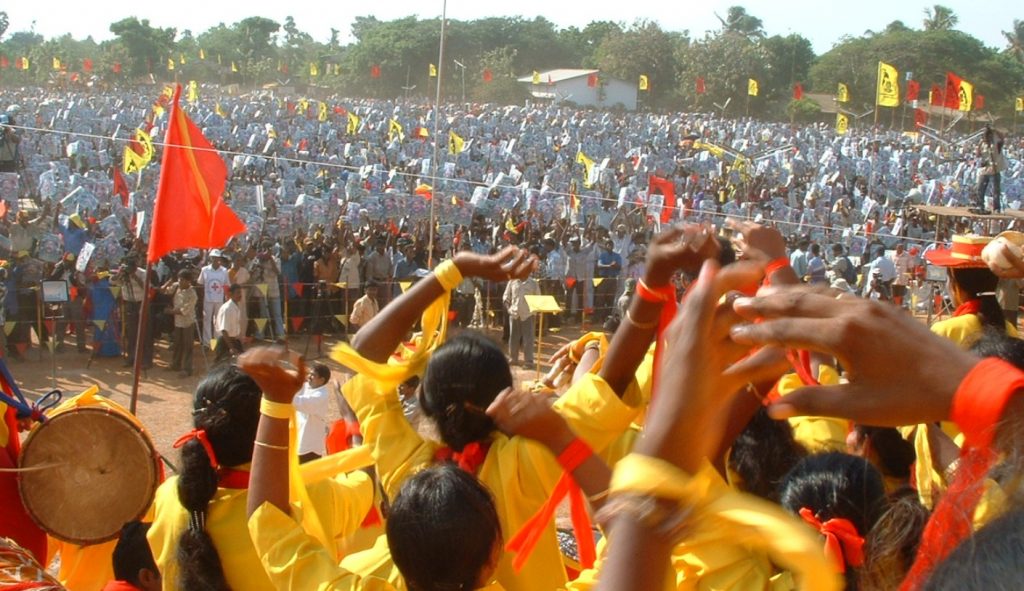
This conference will be thoroughly documented as a historic moment when the Tamil nation demonstrated the capacity for democratic deliberation, strategic thinking, and unified action.
We will show the world that we are not merely victims demanding charity, but a nation claiming our rights.
Representatives carrying democratic mandates from the North-East constituencies.
Groups working on human rights, transitional justice, land rights, missing persons, women's empowerment, youth mobilisation.
Tamil community organisations from across the world. UK, Canada, Australia, Europe, and beyond.
Scholars specialising in self-determination federalism, autonomy, power-sharing, and post-conflict governance.
Experts from truth commissions, accountability mechanisms, and reconciliation processes worldwide.
Representatives from UN agencies, sympathetic states, human rights organisations, and solidarity movements.
Accredited Tamil and international journalists covering this historic gathering.
Parliamentarians from across the world who have voiced for the rights on Eelam Tamils.
| Date / Period | Event | Details | Notes |
|---|---|---|---|
| Pre‑1796 | Independent Tamil homeland | The Tamil homeland in the North‑East existed independently prior to European conquest. | |
| 1796 | Beginning of British rule | British occupation of the island begins. The British amalgamated the Tamil and Sinhala nations into a single administrative unit without Tamil consent. | |
| 1833 | Colebrooke‑Cameron reforms | Introduction of a unitary administrative system over the whole island, the first major act submerging Tamil sovereignty within a centralised state. | |
| Early 20th century | Tamil constitutional engagement | Tamil political leadership participates in constitutional politics under British rule to safeguard Tamil national rights. | |
| 1931 | Donoughmore Constitution | Introduction of universal franchise. Tamil leaders warn that majority rule will result in permanent Sinhala domination. | |
| 1944–1947 | Soulbury constitutional process | Tamil representatives demand federal safeguards and minority protections; these demands are rejected by the colonial authorities. | |
| 1948 | Independence of Ceylon | Power transferred to a Sinhala‑dominated state. The Tamil nation is denied its right to self‑determination at independence. | |
| 1948–1949 | Disenfranchisement of Indian Tamils | Citizenship laws strip Indian Tamil plantation workers of voting rights, the first major act of state‑sponsored racism. | |
| 1956 | Sinhala Only Act | Sinhala made the sole official language, excluding Tamil from administration and public life and institutionalising discrimination. | |
| 1956–1958 | Repression of Tamil protests | Peaceful Tamil protests against discrimination are met with state repression and mob violence. | |
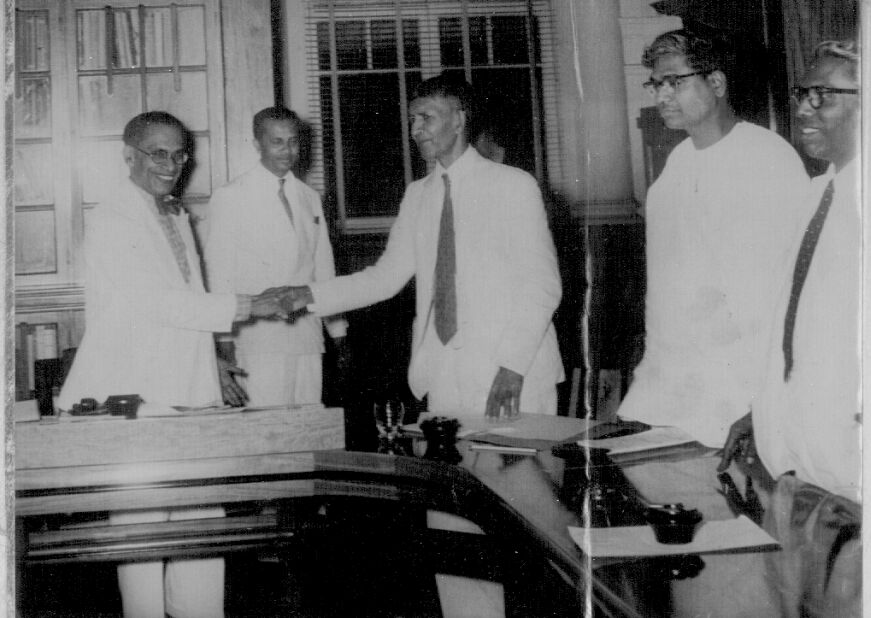
| 1957-07-01 | Bandaranaike–Chelvanayakam Pact | It advocated the creation of a series of regional councils in Sri Lanka as a means to giving a certain level of autonomy to the Tamil people of the country, and was intended to solve the communal disagreements that were occurring in the country at the time. | |
| 1958-05-01 | Abbrogation of the Banda-Chelva pact | The act was strongly opposed by certain sections of the Sinhalese, and was eventually torn up by Bandaranaike in May 1958 due to the pressure of Buddhist monks. | |
| 1958-05-01 | Anti‑Tamil pogrom | Island‑wide violence against Tamils results in deaths, destruction of property, and mass displacement. | |
| 1961 | Tamil satyagraham | Non‑violent civil disobedience campaign demanding language and administrative rights; the state responds with military occupation of Tamil areas. | |
| 1965 | Broken political agreements | Political pacts promising limited Tamil rights are abandoned or not implemented. | |
| Late 1960s–early 1970s | State colonisation and discrimination | State‑sponsored Sinhala colonisation of Tamil areas continues alongside discrimination in education, employment, and economic life. | |
| 1972 | First Republican Constitution | New constitution gives Buddhism foremost place, entrenches Sinhala as the sole official language, and removes remaining constitutional safeguards for Tamils. | |
| 1976-05-01 | Vaddukkoddai Resolution adopted | The TULF declares that Tamils constitute a nation, that the North‑East is their homeland, and that the Sinhala state has forfeited legitimacy, calling for the restoration of Tamil sovereignty and the creation of Tamil Eelam. | "...Only through self-rule in the Tamil homeland can Tamils protect, sustain, and develop their society, economy, and territory." Territorial development under Tamil control is implicit and central, not incidental, to the Vaddukkoddai Resolution. |
| 1977-08-01 | Anti-Tamil pogrom | Post-election violence against Tamils across the island. | |
| 1978 | Second Republican Constitution | Executive presidency and unitary state further entrenched. | |
| 1979 | Prevention of Terrorism Act | Sweeping emergency powers used predominantly against Tamils. | |
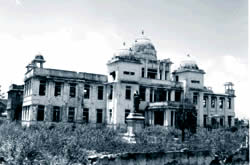
| May–June 1981 | Burning of Jaffna Public Library | Destruction of tens of thousands of Tamil manuscripts and books by state-linked mobs. | |
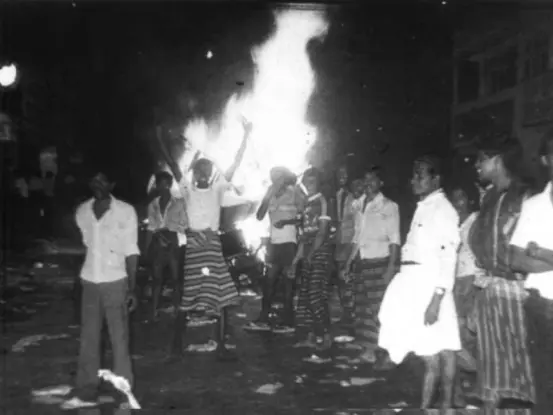
| 1983-07-01 | Black July pogrom | Organised island-wide violence; mass killings and displacement; start of full-scale war. | |
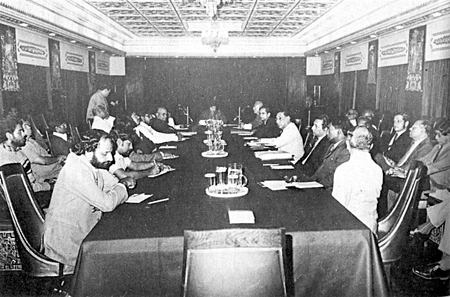
| July–Aug 1985 | Thimphu Talks | Talks between Sri Lankan state and Tamil militant groups; Four Cardinal Principles articulated. | 1 - Shift from Secession to Framework: Vaddukoddai Resolution explicitly demanded a "Free, Sovereign, Secular, Socialist State of Tamil Eelam." Thimphu Principles provided the "necessary framework" for any rational dialogue on autonomy. 2 - Unified Negotiating Platform: For the first time, all major Tamil political and militant groups (TULF, LTTE, EPRLF, EROS, PLOTE, and TELO) agreed on a single set of overarching principles to define their joint aspirations in an international setting. 3 - Thimphu Declaration provided the basis for an alternative solution to an independent state, signaling that if these four cardinal principles were met, the Tamils might consider alternatives to full separation. 4 - Internationalisation: By presenting these principles during peace talks in Bhutan facilitated by India, the Thimphu Declaration elevated the demands of the Vaddukoddai Resolution from a domestic political mandate into a recognised international conflict-resolution framework. |
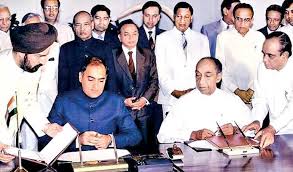
| 1987-07-01 | Indo–Lanka Accord | Agreement with India; 13th Amendment and IPKF deployment. | |
| 1987–1990 | IPKF intervention | Indian military operations in the North-East; heavy civilian suffering. | |
| 1989–1990 | Collapse of North-East Provincial Council | Merger and limited devolution arrangements break down. | |
| 1990-06-01 | Resumption of war (Eelam War II) | Talks collapse; renewed hostilities and civilian massacres. | |
| 1994–1995 | Peace talks with LTTE | Negotiations collapse, followed by renewed military offensives. | |
| 1995–1996 | Capture of Jaffna | Large-scale military operations and mass civilian displacement. | |
| 2001-01-01 | Pongu Thamil | Mass mobilisation asserting Tamil nationhood, homeland, and self-determination - entirely built on the first three Thimphu Principles | 1 - Tamils as a distinct nationality (from Thimphu Principle 1). 2 - Traditional Tamil Homeland (from Vaddukoddai and Thimphu Principle 2). 3 - Right to Self-Determination (from Vaddukoddai and Thimphu Principle 3). Immediate political and practical demands, rather than focussing only on the end goal 1- Withdrawal of Military: Specific call for withdrawal of the Sri Lankan Army from occupied Tamil lands to "restore normalcy". 2 - Interim Administration: Interim Self-Governing Authority (ISGA), building on the Thimphu idea of a "meaningful solution". 3 - Engagement with Peace Talks: Urged SL government to respond to ceasefires and enter negotiations based on the Thimphu framework. |
| 2002-02-01 | Ceasefire Agreement (CFA) | Norwegian-brokered ceasefire recognising LTTE as negotiating party. | |
| 2002–2006 | Peace process | Intermittent talks; core political issues unresolved. | |
| 2006 | Collapse of CFA | Ceasefire unravels; large-scale hostilities resume. |